Earned Media Strategy: A Complete Guide for Small Business Owners
What if your best marketing didn't cost a dime? That's the promise of a smart earned media strategy. In a world where consumers are bombarded by ads, trust in paid advertising continues to fall. According to the 2025 Comms Report, 30% of PR professionals say they are leaning on earned media more than they did just a year ago. And studies also show that 92% of consumers trust earned media over traditional advertising.
For small business owners, that's a huge opportunity. You don't need a massive budget to earn press coverage, social media mentions, or word-of-mouth buzz. You just need a solid game plan. This guide walks you through exactly what earned media is, why it matters, and how to build a strategy that actually gets results.
What Is Earned Media? (And Why It's Different From Paid and Owned)
Earned media is any coverage or attention your brand receives that you didn't pay for or create yourself. Think of it as publicity you earn through reputation, relationships, and good storytelling. It includes press coverage, social media mentions, customer reviews, user generated content, podcast features, and good old-fashioned word of mouth.
It helps to understand earned media alongside the other two types of media your business likely uses:
• Paid media — ads, sponsored posts, paid placements. You control the message, but audiences know it's advertising.
• Owned media — your website, blog, social profiles, email newsletters. You create and control all of it.
• Earned media — coverage and mentions from third parties who talk about you voluntarily. This is the hardest to get, but it's also the most credible.
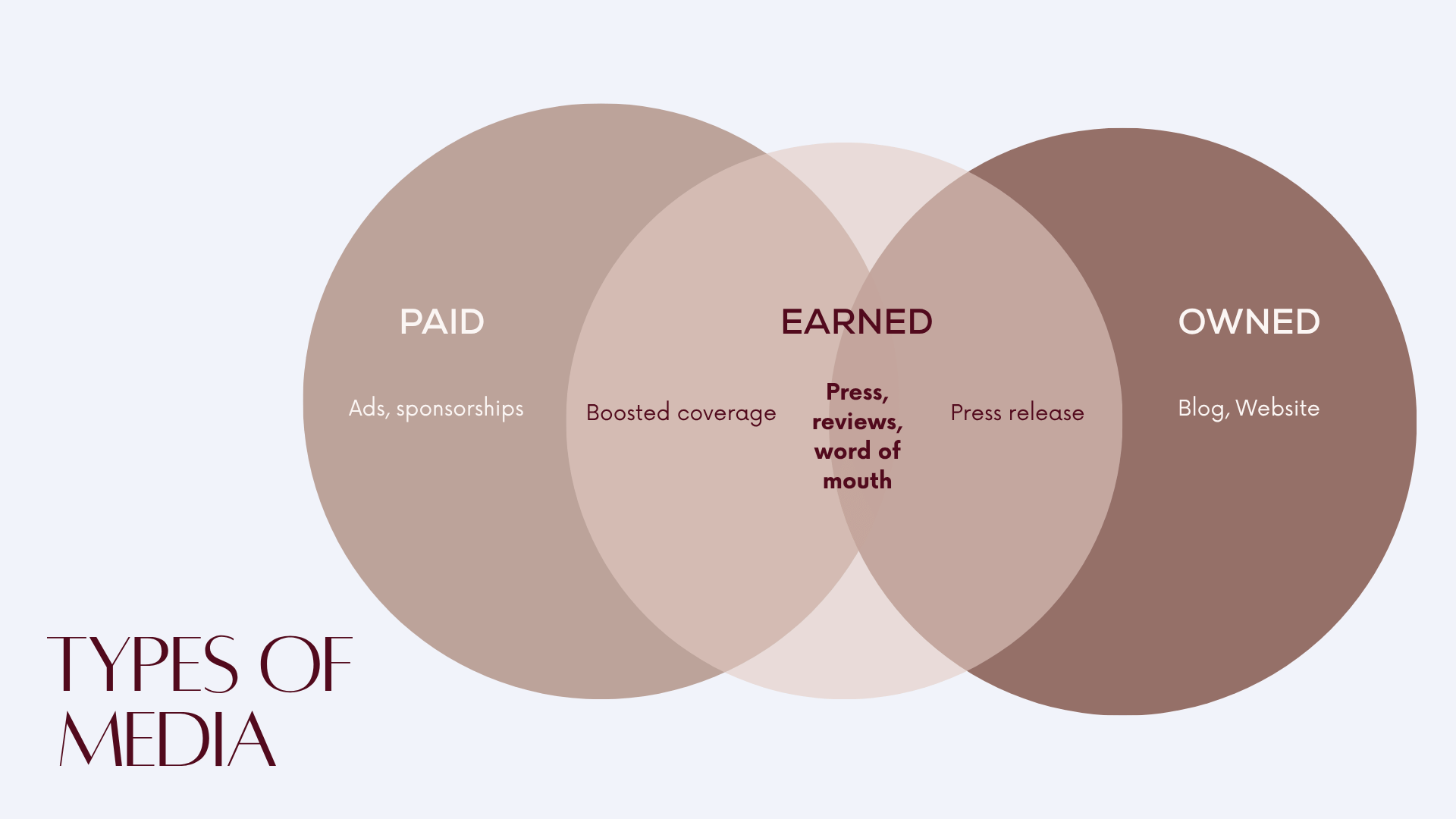
The reason earned media carries so much weight is simple: it comes from real people and trusted media outlets, not from you. When a journalist writes a story about your bakery, or a happy customer shares a glowing review, that carries far more credibility than any ad you could run. It's authentic social proof and it’s the kind of trust money can’t buy.
Why an Earned Media Strategy Matters for Small Businesses
You might think earned media is only achievable for big brands with full PR teams. The truth? Small businesses can and do earn meaningful media coverage every day — often because they have more authentic, human relatable stories to tell than large corporations do.
Here's why it deserves a place in your media strategy, even if you’re working with a tight budget:
• It builds trust. A 2025 Edelman report found that trust is now as important as price and quality in consumers' purchase decisions. Earned media coverage from journalists and independent reviewers helps establish your brand as credible and reliable.
• It expands your reach. When a media outlet or influencer shares your story, you tap into their audience. People who may never have discovered you through your own channels.
• It supports your SEO. Around 60% of earned media articles include backlinks to the brand or source (Driveresearch, 2025). Backlinks from high-authority media outlets improve your search engine rankings, driving organic traffic long after the article is published.
• It's cost-effective. You're not paying for the placement, your main investment is the time you spend in building relationships and crafting great stories.
Types of Earned Media Worth Pursuing
Before you build your strategy, it's worth knowing what kinds of earned media are realistic for your business. Not every format or channel fits every brand, so focus on the channels where your target audience actually spends their time.
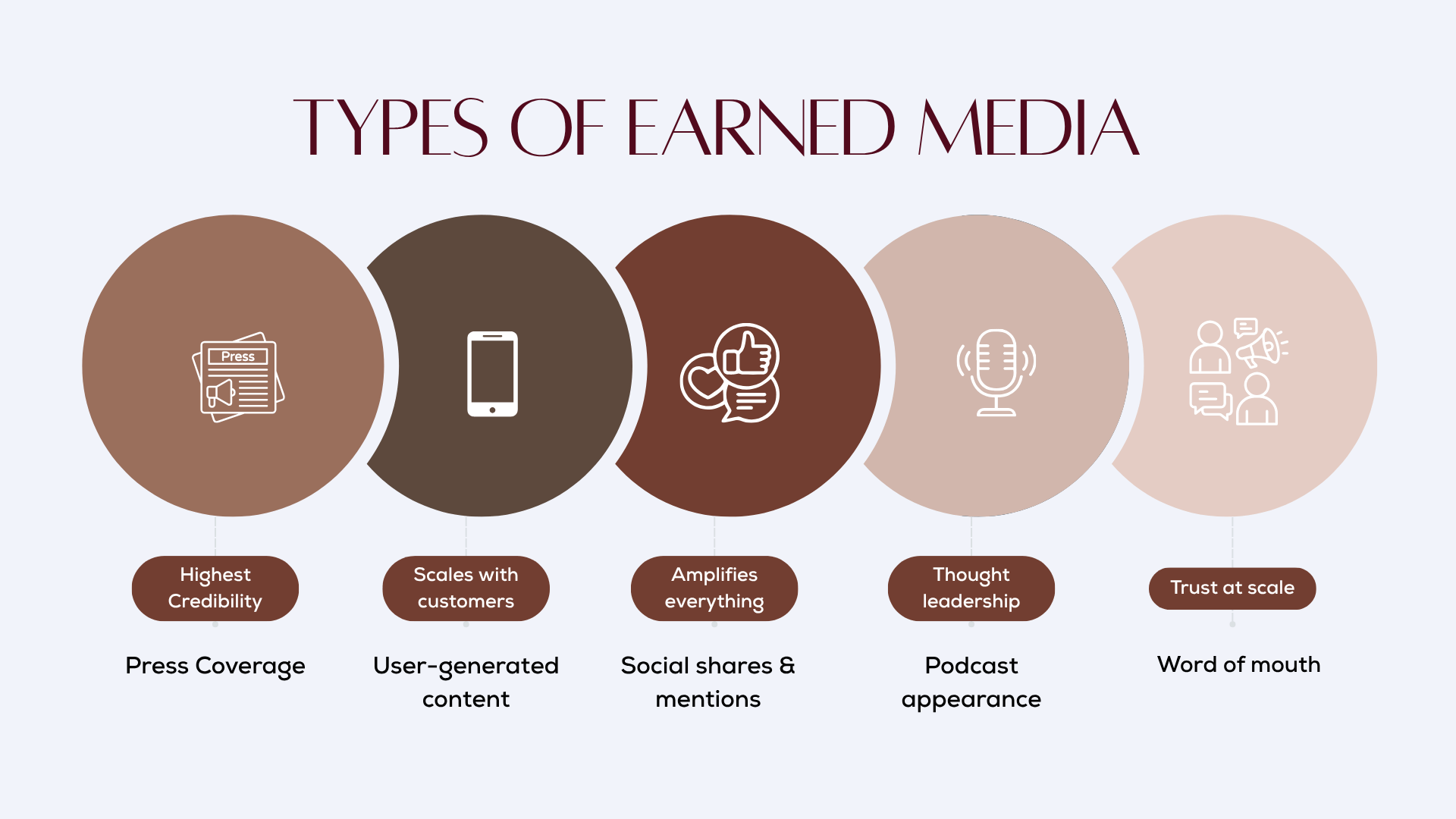
• Press coverage — articles, features, or mentions in local newspapers, trade publications, online news sites, and broadcast media. Press releases remain an effective way to get this kind of earned media coverage especially when they're newsworthy and well-targeted.
• User generated content (UGC) — reviews, testimonials, unboxing videos, TikToks, Instagram posts. Real customers sharing real experiences. Studies show that 91% of people read reviews before buying, and 84% trust them as much as personal recommendations.
• Social media mentions and shares — tags, comments, reposts, and organic conversations about your brand. Sometimes, all it takes is one viral post to put your business in front of thousands of new potential customers.
• Podcast and audio features — being interviewed on a podcast relevant to your industry is a growing opportunity. It puts your voice and thought leadership directly in front of engaged listeners.
How to Build Your Earned Media Strategy Step by Step
There's no one-size-fits-all earned media strategy template. But there is a logical way that works well for small businesses. Here's how to get started.
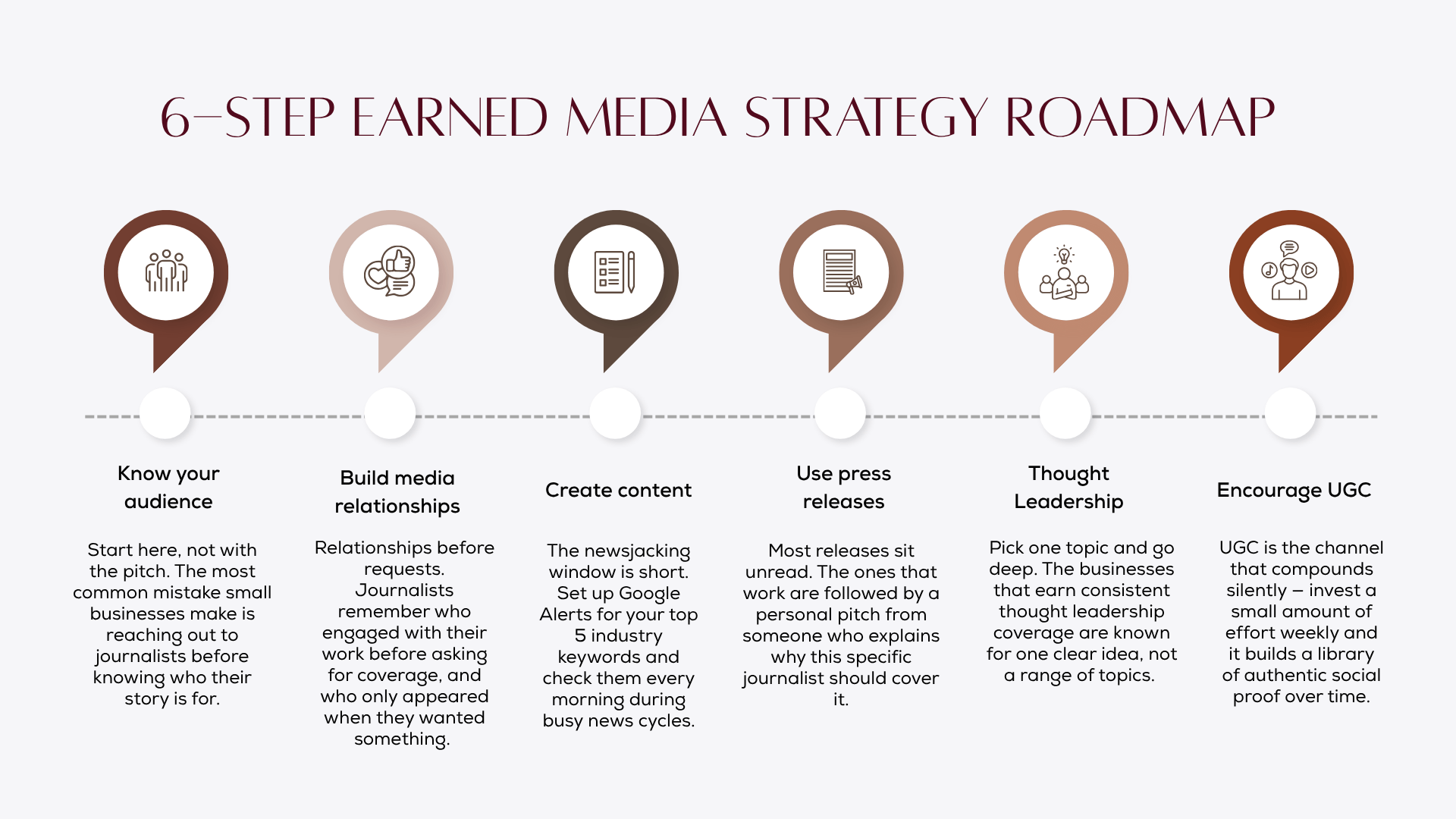
1. Know Your Target Audience
Every successful media strategy starts with knowing and understanding who you're trying to reach. Where does your target audience consume news and content? Does your audience primarily visit a local or national news app? Do they scroll on LinkedIn, browse Reddit threads, or listen to a niche podcast? The more specific you get about their habits and goals, the easier it will be to target the right media channels and tailor your pitches.
A smart way to start is by monitoring mentions of your brand, competitors, and industry keywords across different platforms. Even a few days or even hours of research can show you where the conversations about your business are actually happening, and exactly with who.
2. Build Relationships With Journalists
Relationships with journalists are the backbone of any earned media strategy. Journalists are far more likely to cover brands they know, trust and those that can provide data. The good news for small businesses? Local reporters and niche trade journalists are usually much more approachable than the national media.
Find out who covers your industry or local area. Follow their work, engage thoughtfully with their articles, and introduce yourself — not to pitch a story right away, but to offer yourself as a helpful resource. When the right story comes along, you'll already be on their radar. According to industry research, 67% of journalists in 2025 prefer custom story angles tailored to their specific beat and audience, so personalization goes a long way.
You can also use platforms like a media database tool to find journalists who write about topics relevant to your business, then organize your outreach with a simple CRM. If you belong to a local chamber of commerce or industry association, those connections can open media doors too.
3. Create Compelling, Shareable Content
Earned media doesn't happen in a vacuum. Before journalists or customers talk about you, you need something worth talking about. High quality content, whether it's original research, a compelling story, a useful tool, or a surprising product feature, gives people a reason to share.
Ask yourself: what makes your business unique? Is there a fascinating backstory? A community initiative? Or an interesting take on a trending topic in your industry? Storytelling is your biggest asset here. Brands that consistently earn media coverage tend to build a clear, consistent narrative not just press-release-style announcements.
You can also use tactics like newsjacking: reacting quickly to a trending news story in your industry. Remember Samsung vs. Apple in September 2024? Minutes after Apple’s iPhone 16 launch, Samsung hijacked the global conversation by reposting their own older features with the cheeky caption, "Let us know when it folds." By timing this perfectly with Apple’s peak search traffic, Samsung earned massive media attention not by spending big on new ads, but by staying creative and tuned in to their rival's biggest moment.
Another brilliant recent example is 2025Hellmann’s "Ketchup Currency". Capitalizing on the viral internet debate over whether ketchup or mayo belongs on fries and tapping into the "cost of living" conversation, Hellmann’s launched a site where users could scan their spare ketchup packets and trade them for coupons for mayo. They turned a mundane household annoyance (drawers full of old packets) into a national news story, proving that media relations is at its best when it connects a brand to what people are already talking about.
4. Use Press Releases Strategically
Press releases are a PR classic, and they still work when done right. A well-written press release sent to the right journalists can earn you coverage, backlinks, and brand awareness without any paid placement. In fact, research from 2025 shows that press releases which include quotes have a 40% higher pickup rate by media outlets.
The key is timing and relevance. Send press releases when you genuinely have news such as a new product launch, a community partnership, a significant milestone, or a response to an industry trend. Keep them brief, lead with the most important details, and make it easy for journalists to quickly understand the story. Above all, personalize your outreach: journalists receive hundreds of pitches a week, and a generic blast rarely lands.
5. Establish Thought Leadership
One of the most overlooked ways small business owners can earn media attention is by positioning yourselves as experts in your field. This is thought leadership, sharing your knowledge in a way that genuinely helps your audience, rather than just promoting your business.
You can do this by writing op-eds for local or industry publications, answering journalist requests for expert commentary (platforms like HARO — Help a Reporter Out — connect reporters with sources), or hosting webinars and community events. When people start to see you as a credible, knowledgeable voice, earned media coverage follows naturally.
6. Encourage User Generated Content and Social Proof
Your happiest customers are one of your best-earned media assets. Ask them to leave reviews on Google, Yelp, or industry-specific platforms. Create social media prompts that invite them to share photos of your product or service. Running a simple contest or giveaway can also inspire user submissions.
User-generated content feels authentic because it is. And with 91% of consumers reading reviews before making a purchase, even just a handful of genuine, enthusiastic customer posts can have a real impact on brand awareness and sales.
Media Relations vs. Public Relations: What's the Difference?
A quick note on terms: “media relations” and “public relations” are often used interchangeably, but they’re not quite the same. Public relations (PR) is the broader discipline of managing how your brand communicates with everyone including customers, employees, investors, and, yes, the media. A media relations strategy is a specific subset of PR that focuses on building and nurturing relationships with journalists and media outlets to earn coverage.
For small business owners, this matters because a strong PR reputation like managing your social media reputation, handling customer complaints graciously, or sharing your company values publicly, all contributes to your earned media efforts. When your reputation is solid, journalists and customers are more likely to talk about you in a positive light.
Crisis Communications: Be Ready Before You Need It
Earned media coverage isn't always positive. A bad review, a social media pile-on, or a misunderstood decision can land you in the spotlight for all the wrong reasons. In fact, Research from 2025 found that 75% of consumers judge brands based on how they respond during a crisis, not just what went wrong, but how leadership handles the fallout.
The good news is that preparation pays off. Set up media monitoring alerts so you know right away if your brand is being mentioned online especially if the tone shifts or things heat up suddenly. Have a simple crisis communications plan: know who will speak for yourself, what your key messages will be, and how quickly you'll respond. Addressing problems early and honestly almost always limits the damage far more than going silent or getting defensive.
Media Monitoring: Staying on Top of Your Coverage
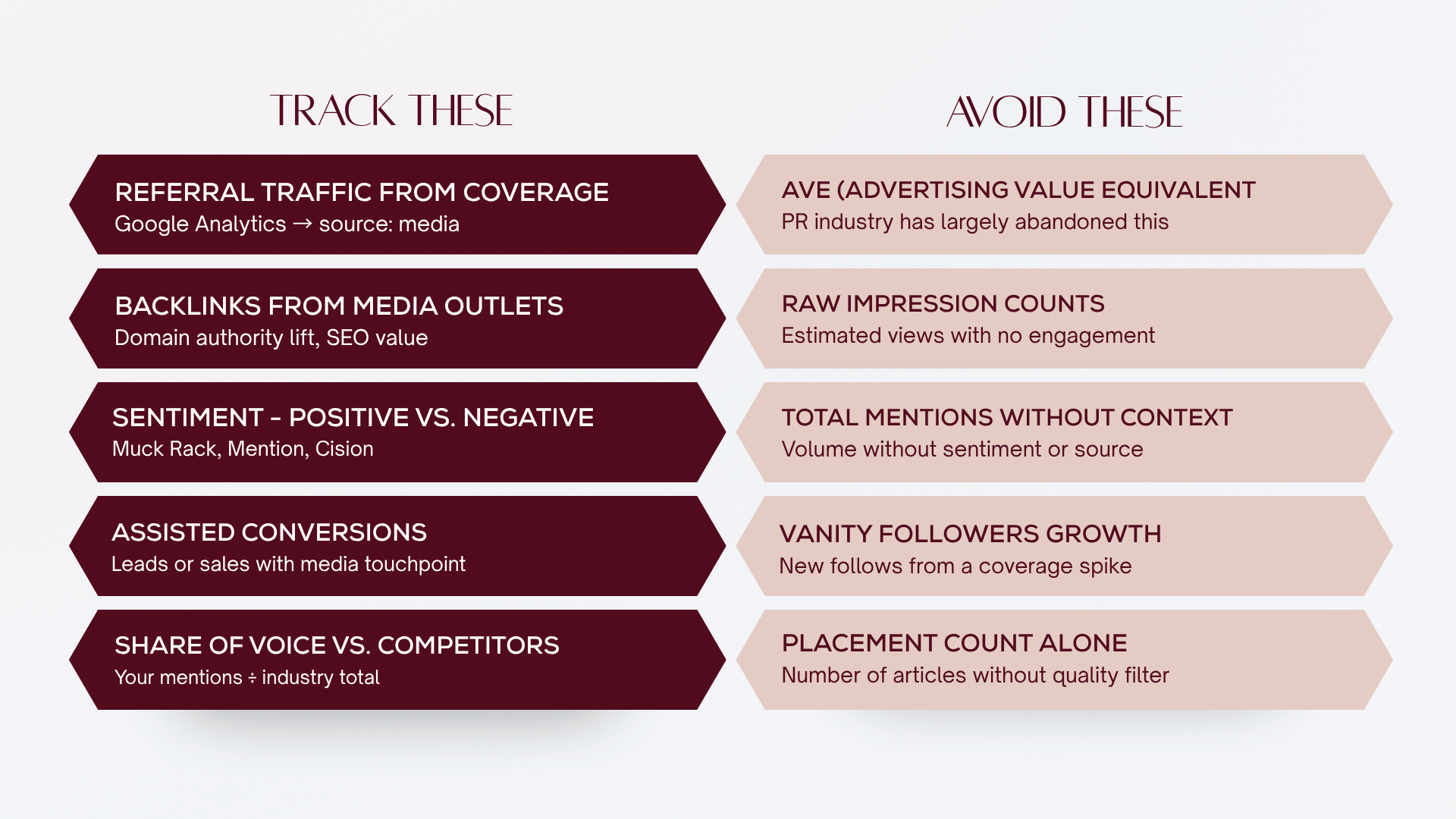
You can't manage what you don't measure. Media monitoring means tracking where and how your brand is mentioned across news sites, social media, blogs, podcasts, and review platforms. It tells you what's working in your earned media efforts, where your most engaged audiences are, and when you need to step in and respond.
At the most basic level, free tools like Google Alerts can send you email notifications whenever your brand name appears online. For more comprehensive tracking — including social media, sentiment analysis, and competitor coverage — tools like Mention, Muck Rack, or Cision offer deeper insights.
Measuring the Success of Your Earned Media Strategy
So, how do you know if your earned media strategy is definitely working? Even though measuring earned media takes a bit more effort than tracking paid ads, it's definitely doable. The key is tying your earned media efforts to real business outcomes, not just the number of times your name pops up.
Best Practices to Make Your Earned Media Strategy Work
• Be consistent. Earned media is a long game. Build relationships steadily, keep publishing quality content, and keep engaging with your audience.
• Be authentic. Don't fake enthusiasm or pay for reviews disguised as genuine feedback. Consumers can instantly spot inauthenticity, and so can journalists. Transparency and honesty are non-negotiable.
• Make journalists' jobs easier. Provide all the ingredients for a good story: a compelling angle, data, quotes, and relevant context.
• Integrate with your other media channels. The best results come from using earned, owned, and paid media together. For example, a great blog post (owned media) might get a little paid boost and earn organic media coverage as a result.
• Celebrate your wins. When your brand gets mentioned somewhere, make sure to share it on your own channels. Resharing not only boosts your credibility but also encourages your fans and followers to join the conversation.
You've Got More to Work With Than You Think
Building an effective earned media strategy takes patience, creativity, and genuine relationship-building. Though it won't deliver overnight results the way a paid ad can, the credibility, trust, and brand awareness you earn—will last much longer and carry more weight with your audience.
As a small business owner, you actually have an advantage here. Your story is more personal and relatable than anything a big corporation can tell. Use that to your benefit.
Visibility is currency. Let’s increase yours.
For so many minority business owners, the journey to get here wasn't linear — it was fought for. And yet, one of the most powerful tools available to amplify that story, earned media, often feels like a space that wasn't designed with you in mind. We're here to change that. Earned media strategy isn't reserved for the well-connected or the well-funded. It's available to every business owner with a compelling story and the right support behind them, and your story is more compelling than you know. Vérité House helps minority founders step into media spaces with strategy, confidence, and a voice that commands attention. You've already done the hard part of building something real. Let us help the world know about it.
Sources & Further Reading
• 2025 Comms Report, PR Newswire / Cision — prnewswire.com
• 2025 Edelman Trust Barometer — edelman.com
• 150+ PR Statistics 2025, PRLab — prlab.co
• 2025 Media Relations Trends, The Bliss Group — theblissgrp.com
• Why Earned Media Matters in 2025, The Harbinger Group — theharbingergroup.com
• Earned Media Strategy, Prowly Magazine — prowly.com
• Earned Media Strategy Guide, Prezly — prezly.com