What Is Newsjacking? How Small Businesses Can Use Breaking News to Get Noticed
In 2025, American Eagle rolled out a denim campaign featuring actress Sydney Sweeney built around a "great jeans / great genes" play on words. The backlash was instant…and intense. People called out the campaign for using “great genes” alongside a blonde-haired, blue-eyed image, at a time when those kinds of messages were especially sensitive. Critics also raised concerns about beauty standards and hyper-sexualization. Before long, every major news outlet was talking about the campaign, but for all the wrong reasons.
Gap saw the opening. They saw the headlines and quickly rolled out their own “Better in Denim” campaign featuring the pop group KATSEYE. This time, the message was all about inclusivity and style. They didn’t name American Eagle. They didn’t need to. They just showed up with a clear point of view at exactly the right moment, and they earned a wave of positive media coverage because of it.
That’s a textbook example of newsjacking done right.
But you don’t need to compete with a big rival to take advantage of these moments. The real lesson here for small businesses: When an issue or conversation starts trending in your industry, the brands that speak up quickly—and authentically—are the ones that get noticed. This guide breaks down what is newsjacking, how it works, and how to do it without risking the reputation you’ve worked so hard to build.
What Is Newsjacking?
Newsjacking is simply inserting your brand’s perspective into a breaking news story to gain attention…fast. Marketing expert David Meerman Scott coined the term in his 2011 book, highlighting that smaller brands can stand out, sometimes even more than industry giants, if they’re fast and genuinely helpful when the news hits.
Basically, the news cycle creates a wave. Newsjacking is learning how to surf it.
The idea isn’t to hijack the news for shameless promotion. It’s to offer something valuable when journalists and audiences are paying attention. If you have timely expertise or a fresh angle when reporters are scrambling for sources, your chance for media coverage skyrockets and you don’t need months of networking to get noticed.
The Benefits of Newsjacking for Small Businesses
The benefits of newsjacking go well beyond getting in the news once. Done consistently and carefully, it can:
• Generate earned media. Journalists want quick, relevant sources for their breaking stories. If you’re fast and credible, you have a real shot at being quoted, and that coverage is free.
• Build thought leadership. Every time you weigh in (genuine insight) on trending topics, you reinforce your authority in your industry. Over time, you become the go-to expert.
• Boost social media engagement. Content tied to trending news often gets way more eyeballs and interaction. When you tap into what people are talking about, engagement follows.
• Level the playing field. In a breaking news moment, speed and relevance often matter more than name recognition. If you have the right insight at just the right time, your small business can grab attention, and even outshine much bigger competitors, simply by being the first to show up.
How to Spot a Newsjacking Opportunity
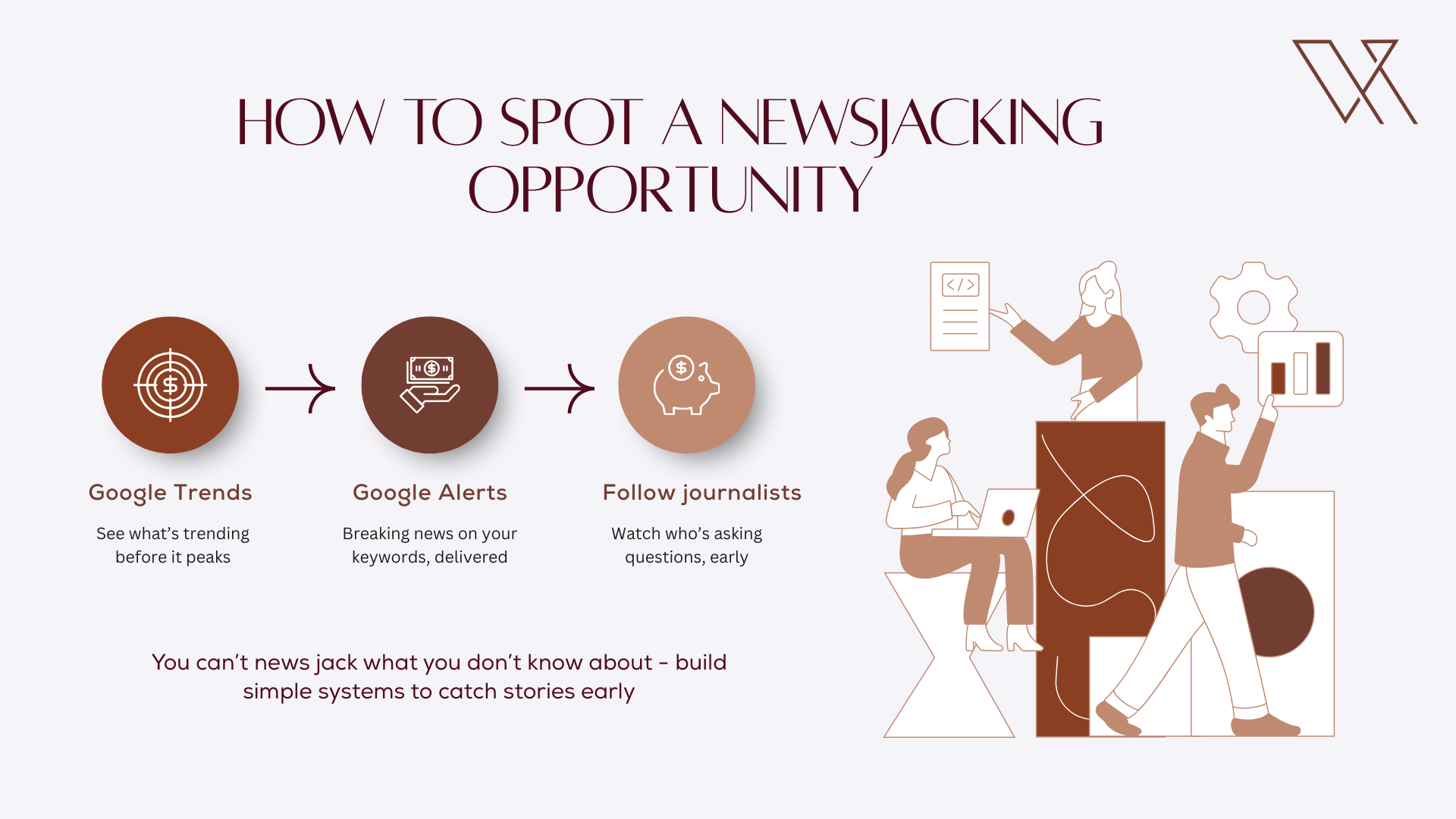
You cannot newsjack what you don’t know about. The small businesses that master newsjacking usually have simple systems in place to catch stories while they’re still fresh.
Use Google Trends: This is an easy starting point. This free tool shows what people are searching for in real time before they peak.
Set up Google Alerts: Plug in specific keywords related to your business or industry and get breaking news delivered straight to your inbox.
Follow industry journalists: Connect with journalists who cover your industry on LinkedIn and social media. When they start asking questions or sharing early coverage, it’s a sign there may be a conversation you can add value to.
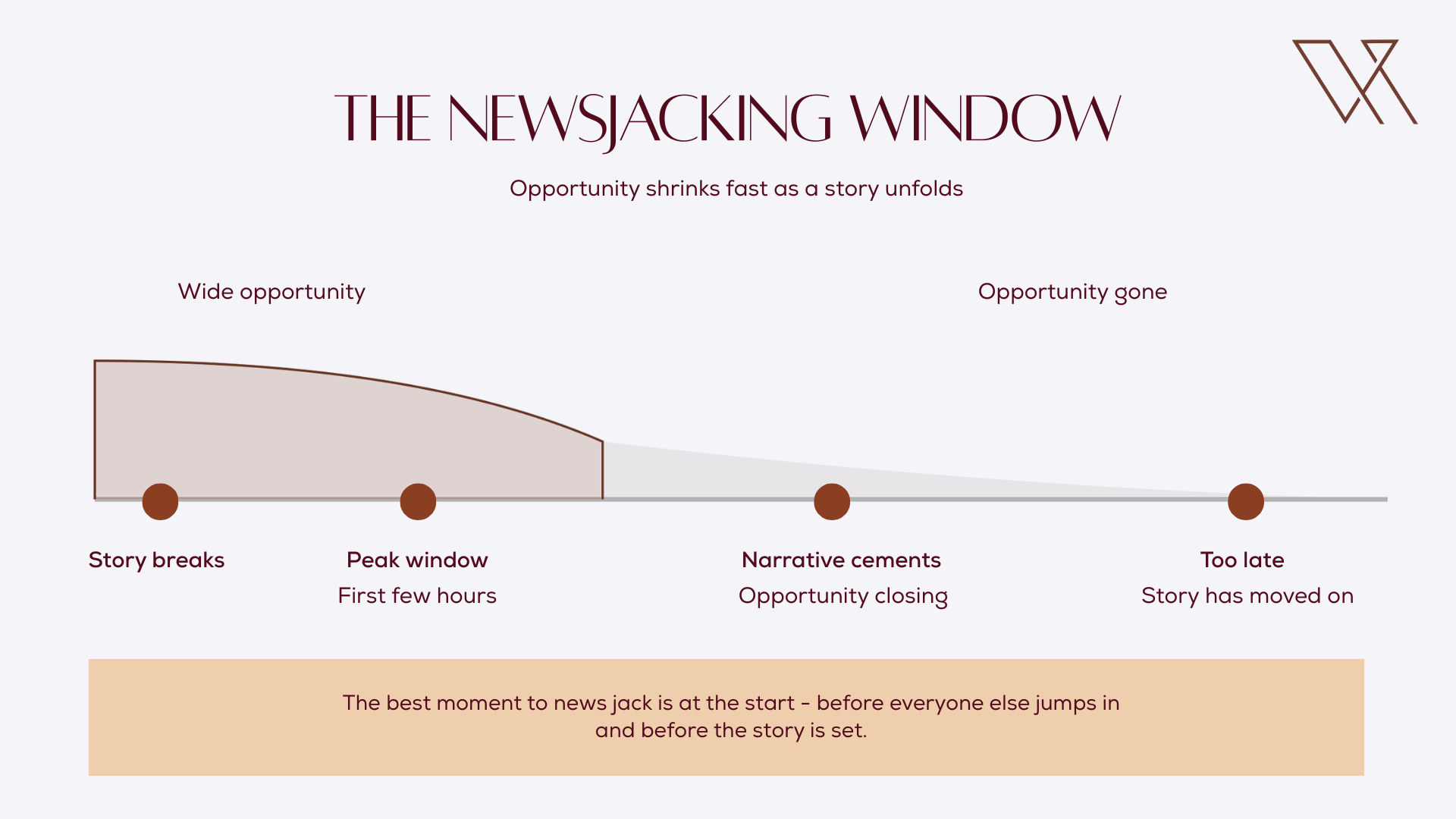
The window is short. According to David Meerman Scott's framework, the best moment to newsjack is right at the start of a breaking story, before everyone else jumps in and before the narrative is cemented. If you wait until the story passes peak time, you’ve missed your chance.
Good Newsjacking vs. Bad Newsjacking
The line between genius newsjacking and a brand disaster usually comes down to two things: relevance and sensitivity.
Good newsjacking actually adds something value to the conversation. Take the Gap and KATSEYE “Better in Denim” campaign: instead of starting a whole new story from scratch, Gap joined a hot topic (sparked by American Eagle) and used that moment to say something real about their own brand values. They didn’t bash the competition, they simply reframed the conversation in a way that felt true to them. The result? Positive press and engagement, all for showing up at the right time with an authentic take.
Example for small businesses: A minority-owned financial consulting firm commenting on new SBA lending guidelines the day they are announced, explains in plain language what the changes mean for underserved entrepreneurs.
This a textbook newsjacking opportunity. It is timely, relevant to their expertise, and genuinely useful to a journalist covering the story.
Bad newsjacking, on the other hand, tries to force a connection that doesn’t exist, or worse, capitalizes on a tragedy or crisis just for attention. Remember when DiGiorno used a domestic violence hashtag to sell pizza, or Kenneth Cole tied product promos to the Arab Spring? Both brands tried to be timely, but totally missed the mark, and the public noticed. The backlash was fast and fierce.
The rule is simple: if your brand doesn’t have something meaningful to add, don’t add noise. Your credibility is worth more than a few quick clicks.
How to Newsjack Without Backfiring
• Monitor early, act fast. Use tools like Google Trends and Google Alerts to track stories as they’re unfolding. The first hours of a breaking news story are where the opportunity lives.
• Stay in your lane. Only weigh in on topics where you have real expertise. Journalists and audiences can tell when a brand is forcing a connection, and it hurts your credibility.
• Lead with insight, not promotion. Your pitch should offer useful context, insights, or expert analysis, not just plug your product. If your commentary wouldn’t make sense without pitching your business, go back to the drawing board.
• Avoid sensitive stories. Tragedies, disasters, and humanitarian crises are almost never appropriate newsjacking territory unless you can offer direct help or expert, sensitive commentary. When in doubt, sit it out.
• Amplify what lands. If your newsjack gets featured in the media or sparks engagement on social media, share it everywhere! Building momentum is what makes newsjacking work in the long run.
There Is an Angle Here. Let's Find It.
Think of the news cycle like a parade moving through town.
You didn't plan the parade. You didn't fund it. You didn't design the floats. But you own the best storefront on the route — and if you open up shop early, put your sign out front, and give people a reason to step inside while they're already gathered on your block — you benefit from every bit of foot traffic that parade created.
Newsjacking is knowing the parade is coming, positioning yourself on the right block, and being ready when the crowd arrives.
The businesses that lose? They hear the parade from the back, and never make it to their front door in time.
At Verite House, we help small and minority-owned businesses identify the right moments to enter the news conversation and craft the kind of real-time commentary that actually earns media coverage. Let’s turn breaking news into a chance for your business to lead and get noticed.