Press Kit Sample: A Copy-Paste Template You Can Use Today
Most blogs about press kits describe one. This one shows you a full press kit sample first, then explains the choices behind it.
A press kit is a single page holding everything a journalist needs to write about you; company facts, photos, bios, logos and contact details. It lives on your website so people can find it without hassling you.
Think of it as a portable showcase of who you are.
Press kit and media kit mean the same thing. Use whichever term you prefer.
Here's why it matters. Cision's 2026 State of the Media Report surveyed 1,899 journalists across 19 markets and most sort through more than 50 pitches a week. The report asked what would help them most and their most common answer was to get clear, accurate and complete information up front.
A press kit is that, in one file or link.
The sample
This example below uses a fictional company, but its structure remains accurate.
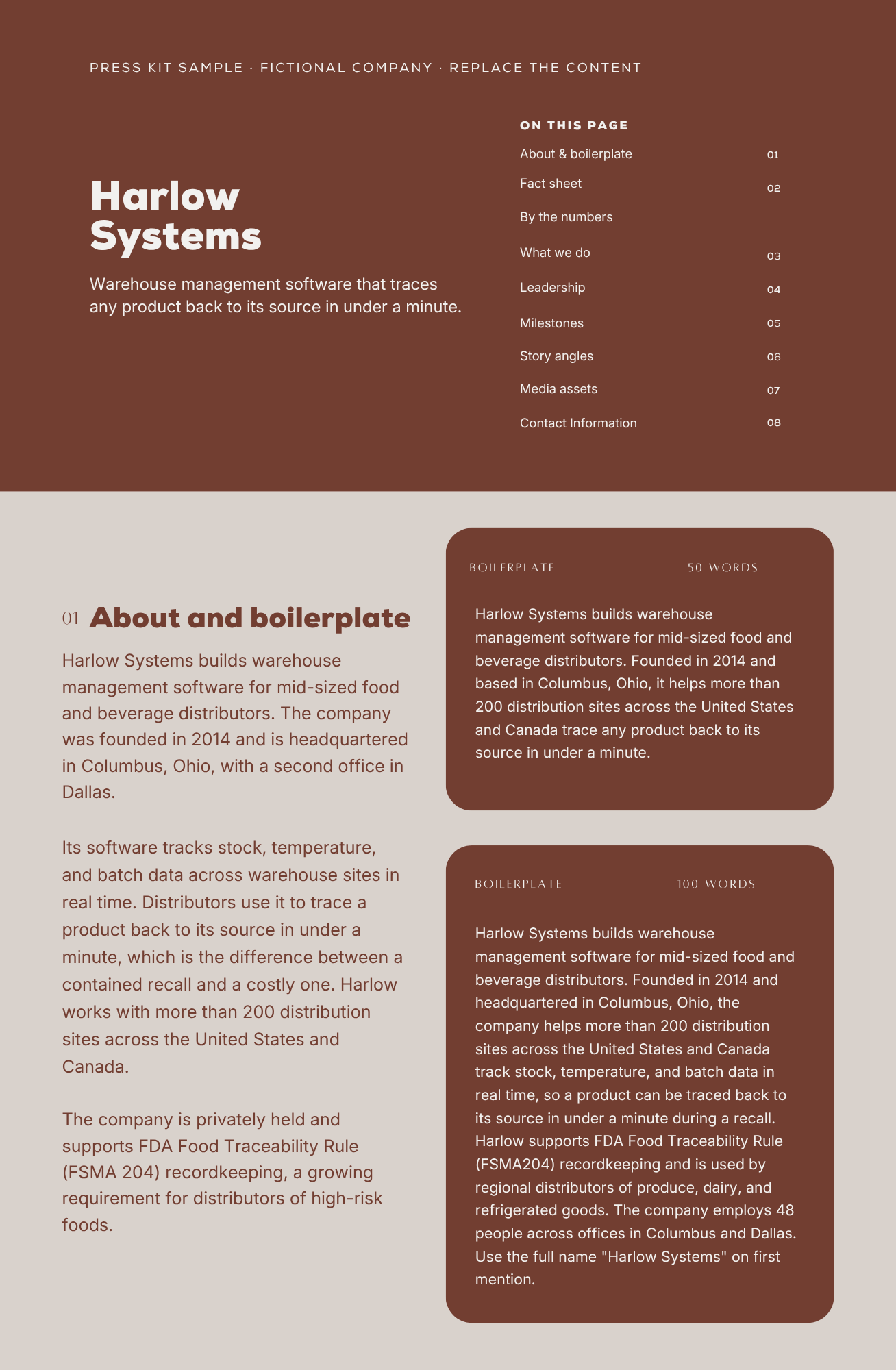
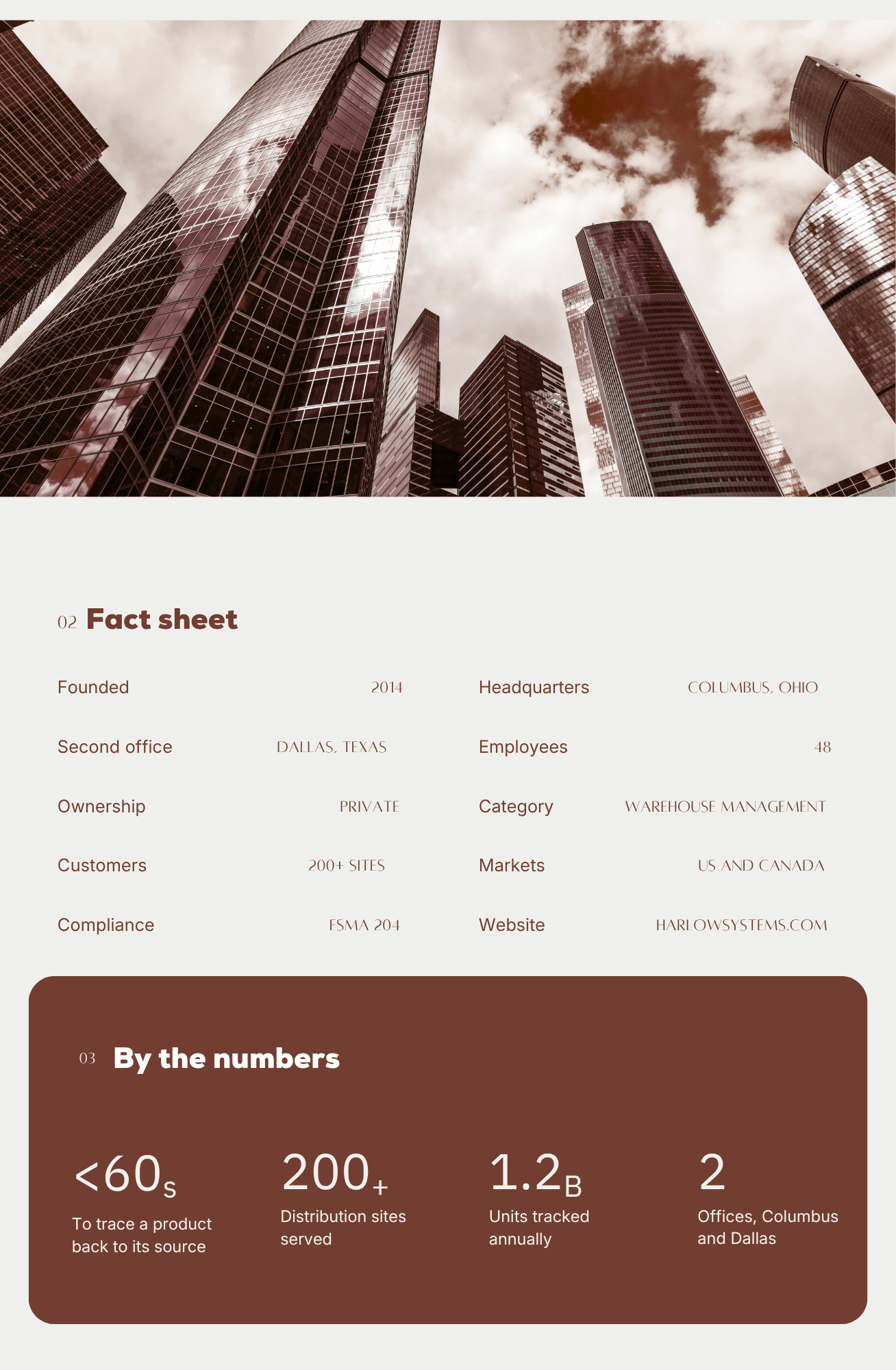
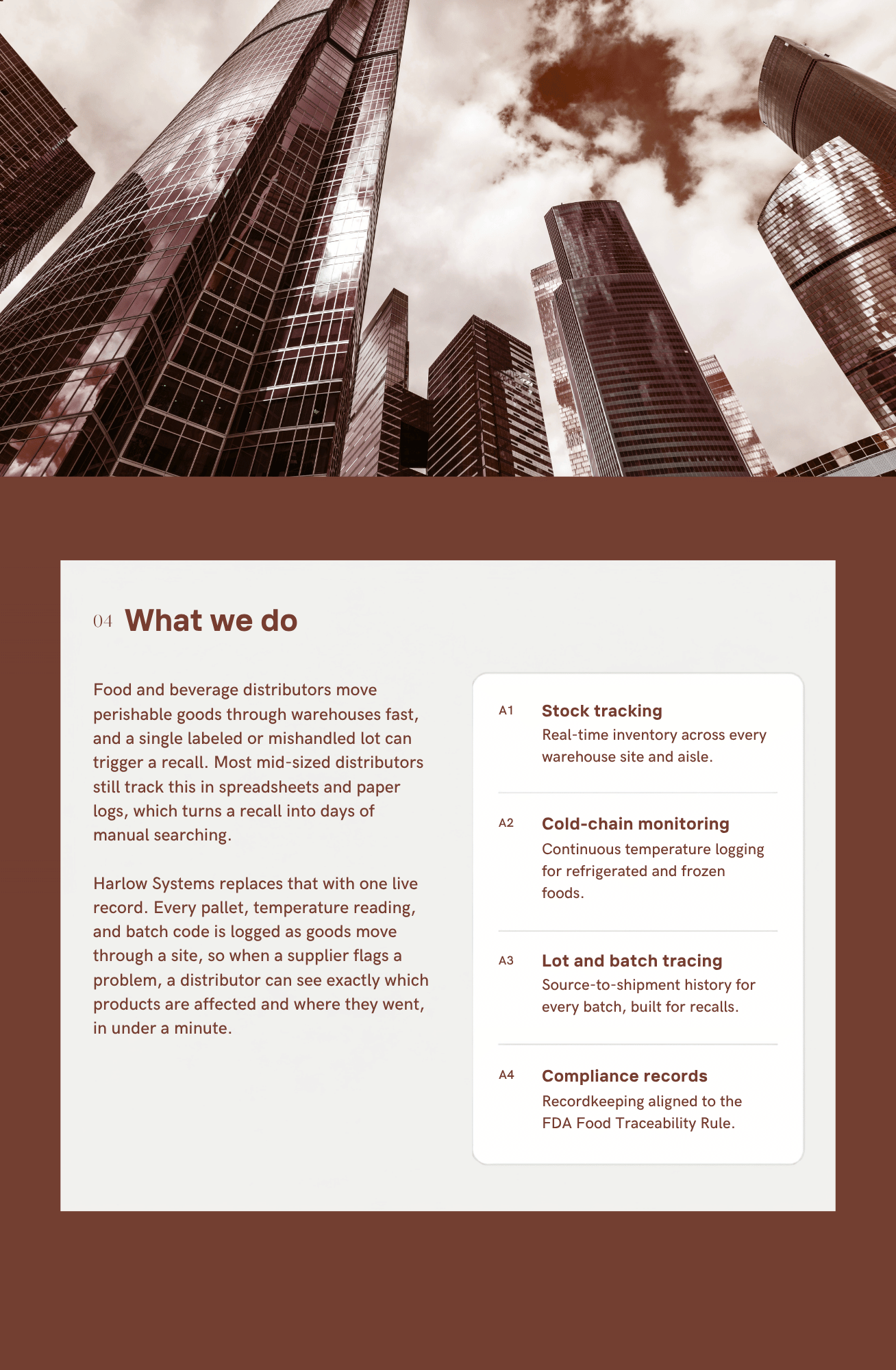
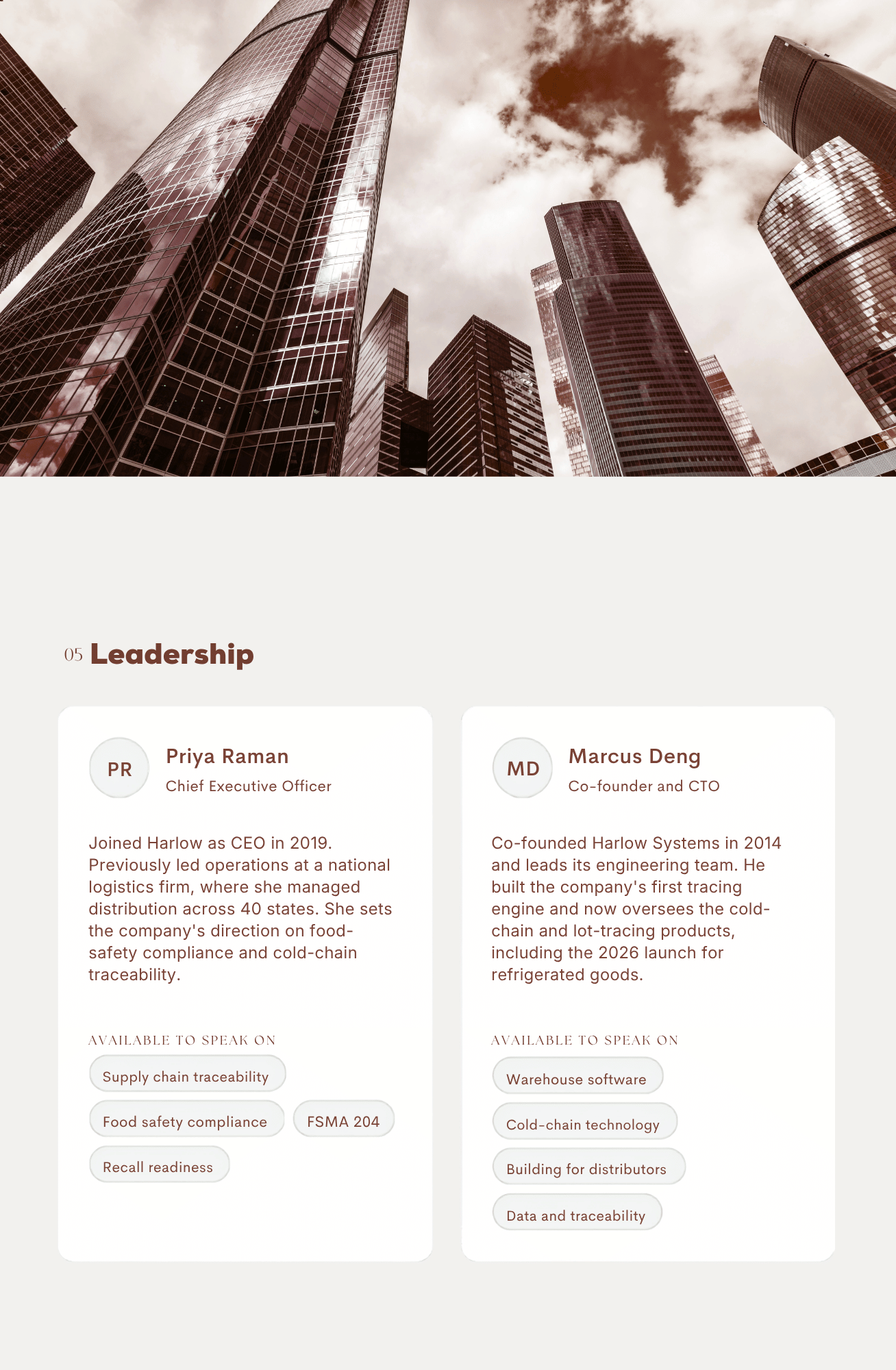
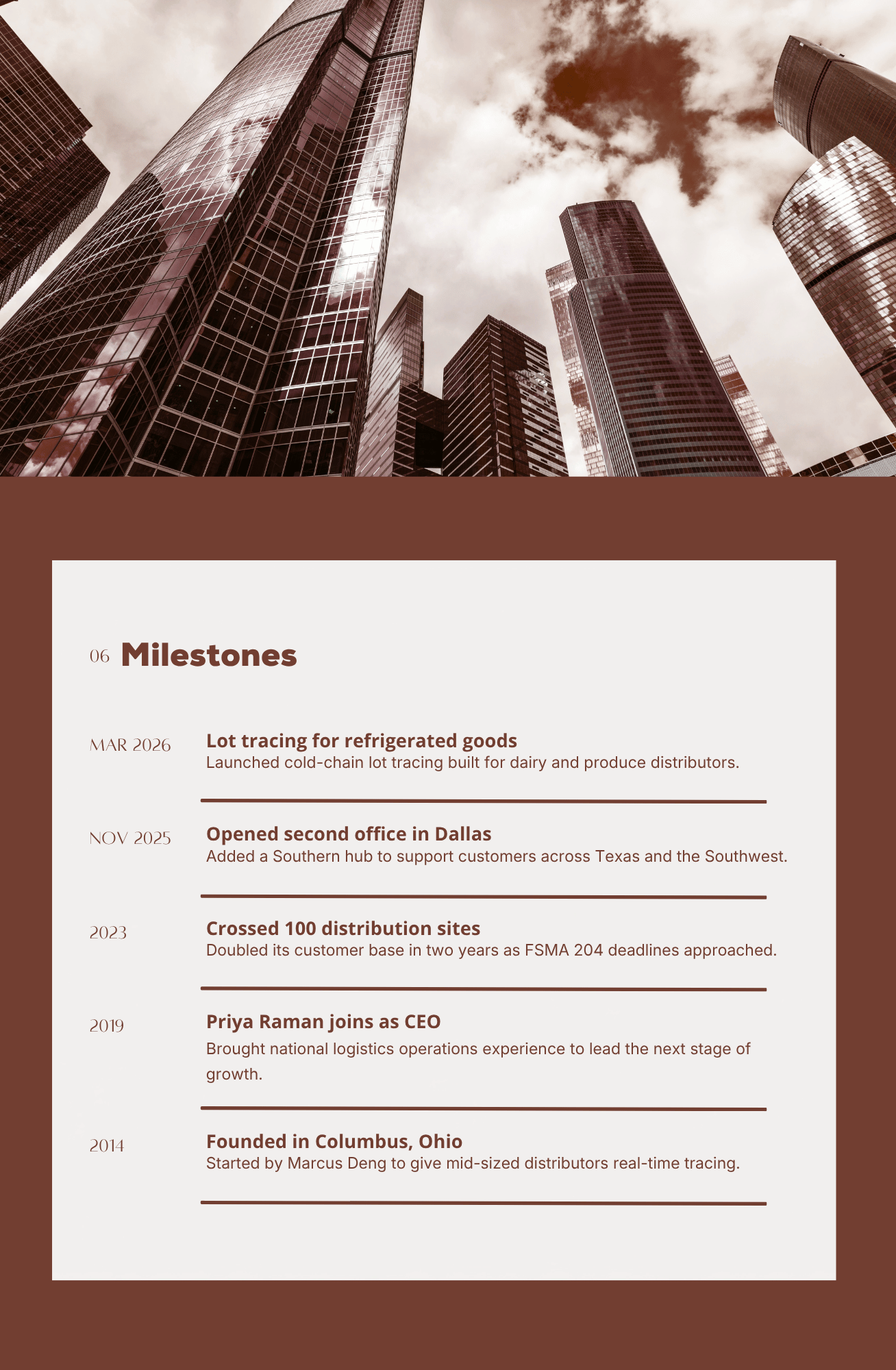
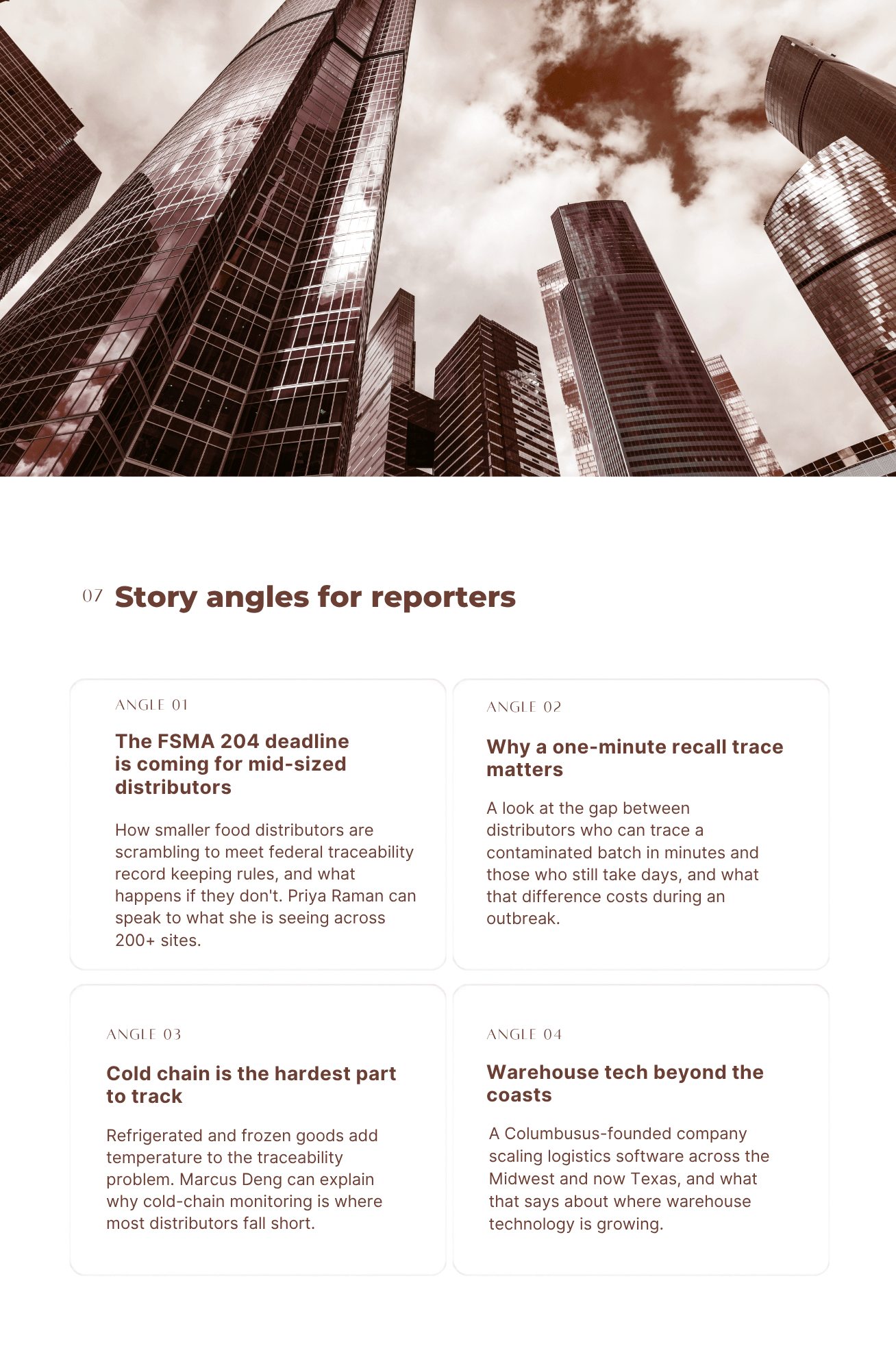
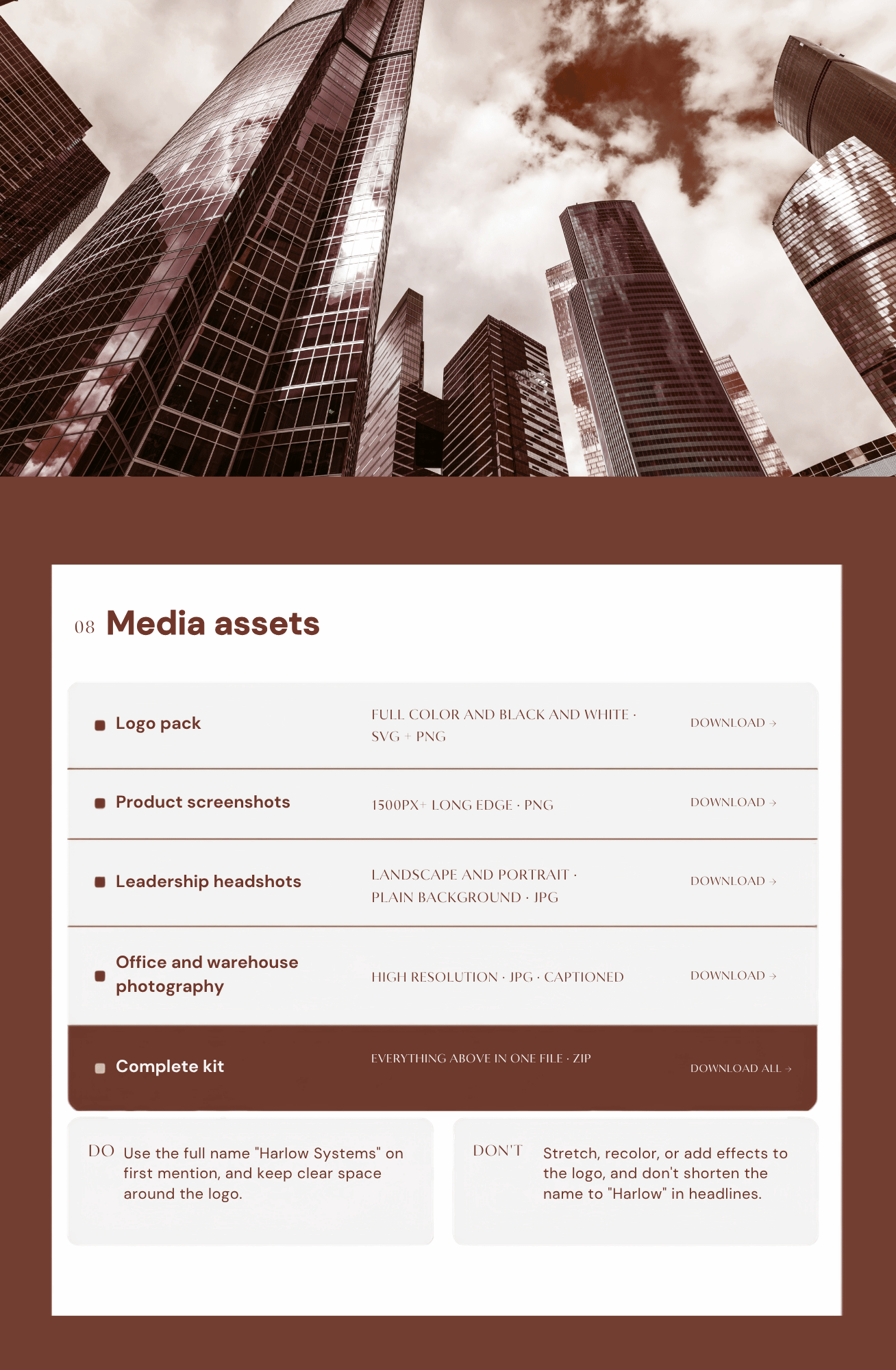
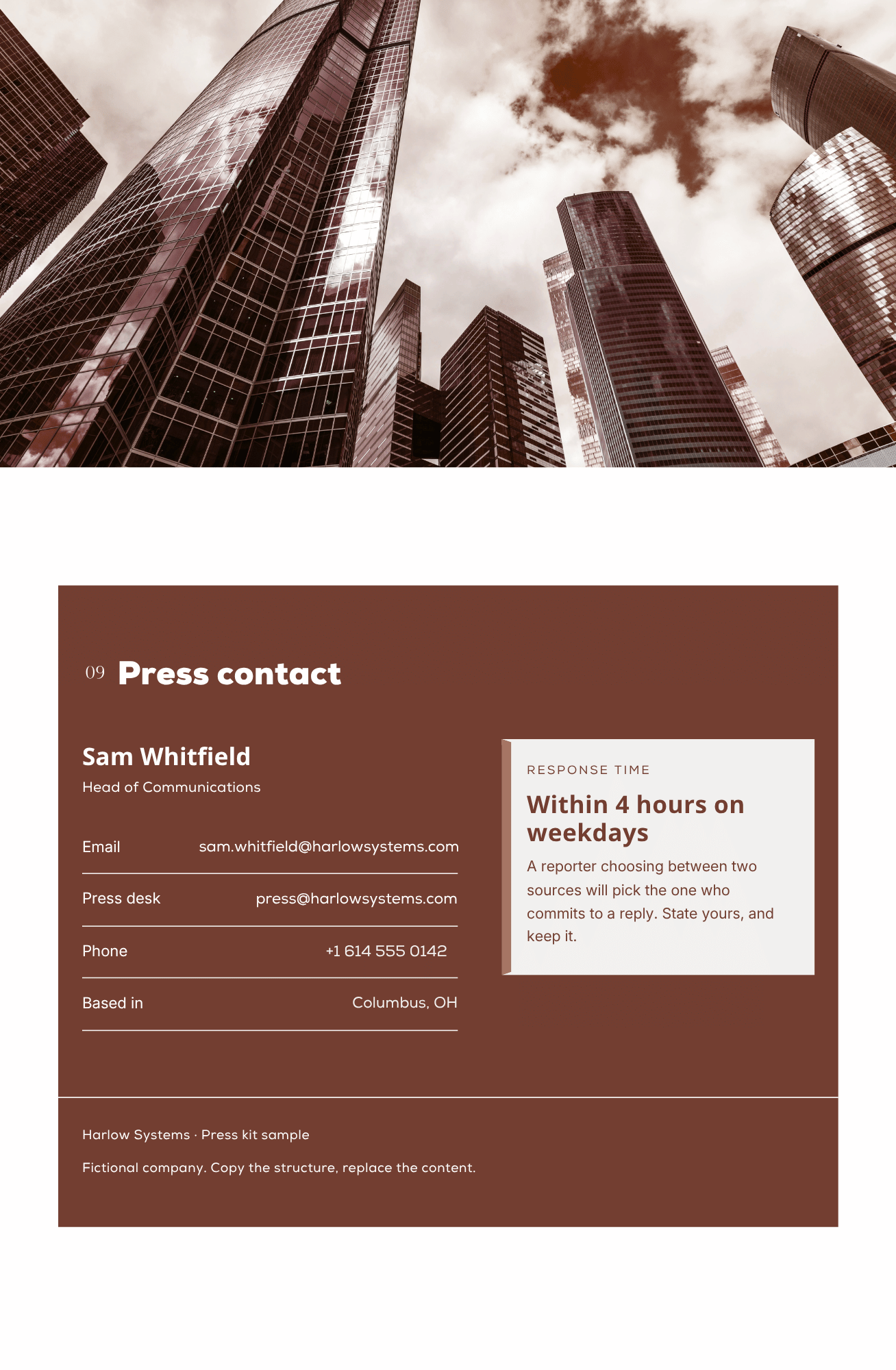
That's the whole thing. Around 250 words plus files.
Why it's built that way
Facts sit near the top. A journalist on deadline needs your founding year and headcount fast. Bullet points beat paragraphs here.
The leadership section names an interview topic. Most press kits list a job title and stop. Saying what your CEO can speak about turns a bio into an offer.
Recent news is short. Three items, then a link to the rest. Nobody reads a full archive.
Contact details include a response time. This is rare and it works. A reporter deciding between two sources will pick the one who promises their response time within four hours during the week.
The file specs nobody explains
"High quality images" is the standard advice. It's not enough. Here's what to actually prepare.
Logos. Supply four versions: full color, black and white, SVG and PNG. The black and white version matters more than people expect. Print outlets and some newsletters still need it, and if you don't provide one, someone will make their own that may not be to your liking.
Photos. At least 1500 pixels on the long edge, ideally larger. JPG for photographs. Include a mix: product shots, your premises, and people.
Headshots. Should be taken behind a plain background. Both landscape and portrait crops if possible.
File names. Name them properly. harlow-systems-logo-black.svg is useful. Final_v3_USE THIS ONE.png is not.
A ZIP of everything. One download link saves a journalist five clicks.
Captions. Write a line for each image describing what it shows and who took it. All images must be owned by you or the company. This gets copied straight into articles and will avoid copyright concerns for publications.
The short version
The sample above assumes you have photos, news and a comms person. Plenty of businesses have none of that.
Start with four things:
A paragraph explaining what you do
Five company facts
A logo and two decent photos
A name, email and phone number
That's a working press kit. It fits on one page. You can add the rest later.
What matters is that it exists and it's accurate. A short kit that's up to date beats a detailed one built two years ago.
If you're a solo creator, not a company
The sample above is company-shaped. Musicians, authors, consultants and creators need something slightly different.
Swap the company facts for personal ones. Where you're based. What you're known for. Notable work, credits or clients. Audience numbers if they're strong.
Keep the same discipline on assets. A press photo you own the rights to, in landscape and portrait. A short bio in two lengths: 50 words and 150 words. Editors will use one or the other, and providing both saves an email.
One extra thing helps here. List your booking or licensing terms if they apply. A journalist covering your tour, book or course wants to know availability without asking.
The rest carries over. Facts near the top, real contact details, files people can actually download.
Where to put it
Your own website, on a page called Press or Media. Link to it from your footer.
Avoid hosting it only in Google Drive or Dropbox. Links expire, permissions break, and journalists shouldn't have to request access to something you want them to use.
If you send a press kit by email, send the link rather than 40MB of attachments.
Mistakes worth avoiding
Marketing language. A press kit isn't a brochure. "Industry-leading innovative solutions" tells a reporter nothing. Facts do.
Missing contact details. It happens more than you'd think. A press kit without a contact and a working phone number is a dead end.
Stale numbers. Headcount, customer counts and office locations date fast. Check them twice a year.
Locked files. Watermarked images and PDFs that can't be copied get skipped.
No file sizes listed. If a download is 200MB, say so.
Keep it current
Put a review date in your calendar. Twice a year is enough for most businesses, plus any time something material changes.
Check the numbers, the links, the photos and the contact information. Old headshots of former employees are the most common problem, and the most avoidable.
A press kit is a small piece of work that keeps paying out. It just needs to be accurate.
If assembling this yourself sounds like a job that will sit on the to-do list for six months, we can do it. Verite House builds press kits and writes press releases that point back to them, so the entire thing works as one set of materials rather than four separate jobs. Ask us about your press kit.